A QR code on a car’s glass isn’t new. The fuel-economy label has carried one since 2012, though no study we know of has measured how many shoppers scan it.
What the label’s code is for
When EPA and NHTSA redesigned the label, they added a QR code so a shopper could get more information on a smartphone. EPA’s used-vehicle label carries one too. It’s the government’s code, and it opens the government’s information.
What a ShortCut adds
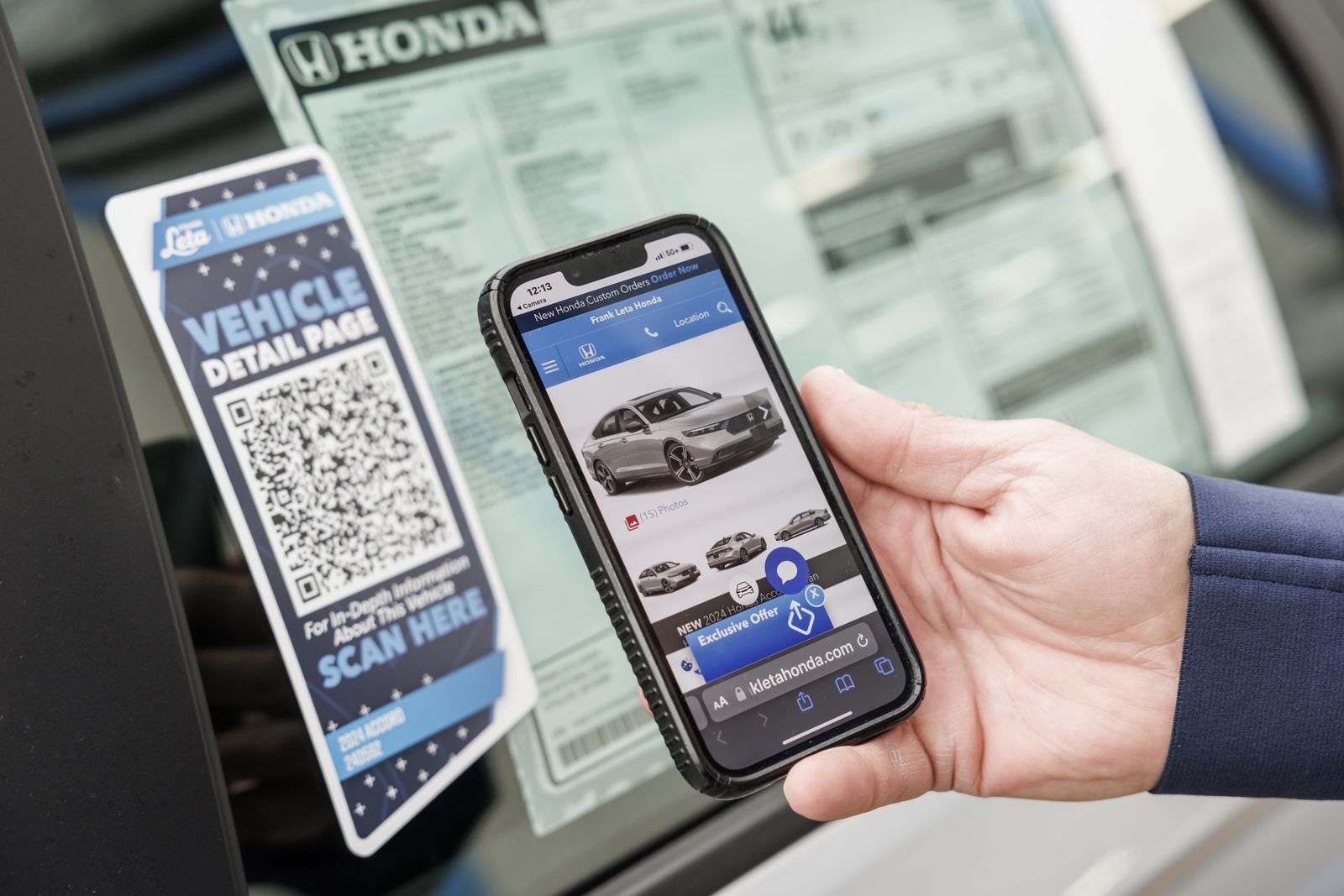
A ShortCut is a QR graphic for the same glass that opens a page on your website instead: on a used car, the car’s own page, where the photos, the options and the history already live. A ShortCut Pack pairs it with a strip along the top of the windshield, one pack per car.
Why the short link stays
Not everyone scans. When the Census Bureau printed both a QR code and a web address, older respondents were likelier to type the address, so every ShortCut prints a short link beside the code.
How it works. What’s in a ShortCut Pack, where each piece goes, and how it gets onto the car.
Sources
U.S. EPA, Learn About the Fuel Economy Label: the 2012 redesign and its QR code, and the used-vehicle label.
U.S. Census Bureau, QR Codes in the Census Household Panel (FedCASIC, 2024): who typed and who scanned (p. 13).
More Field Notes
-
Why our QR graphics say “point your phone camera”
What two Census Bureau studies found about printed QR codes, and where our instruction wording comes from.
-

The lot is where the research lands
What 2025 buyers did online, what they still did in person, and what that leaves for the glass.