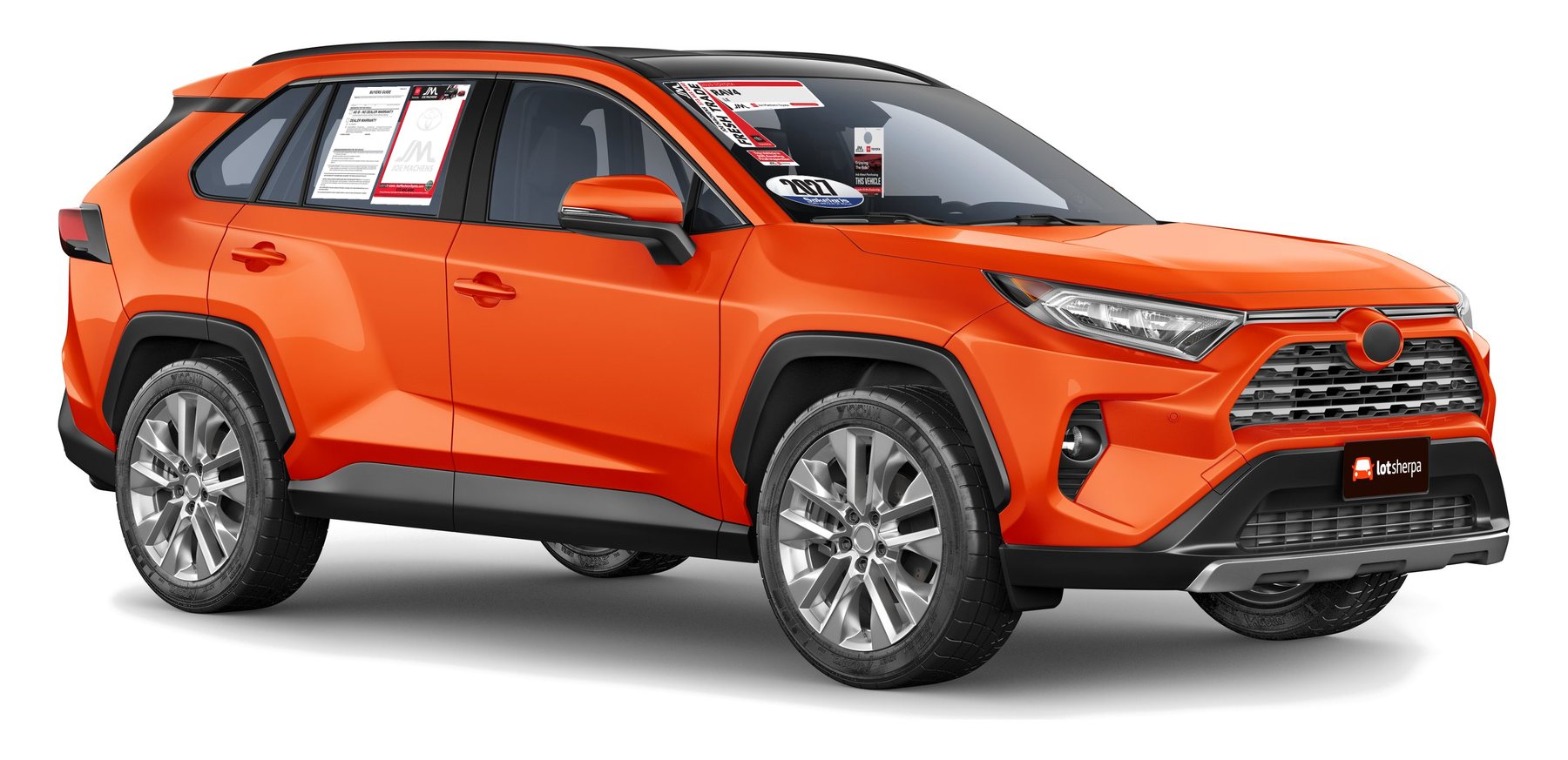
On-lot vehicle merchandising is the printed graphics a dealership puts on the cars it sells and around the lot they sit on: windshield banners, mini-marks, body sides, hang tags and hood bows, and the banners and signs around them. Lot Sherpa is our name for that line.
Each piece has one job. It says what the car is, what’s worth knowing about it, or where to find the rest.
The pieces, and where they go
| Piece | Where it goes | What it usually carries |
|---|---|---|
| Windshield banners: flyouts, ovals, toppers | Along the top of the windshield, passenger side | The year, the model and three facts, or the month’s event |
| Complements: model-year triangles and ovals | The passenger corners of the windshield: triangles up top, ovals in the lower corner | The model year, a loaner tag |
| Mini-marks | Down the passenger A-pillar; certified marks under the windshield banner | Fresh Trade, inspection, certified |
| The ShortCut | The rear lower corner of the front door glass | A QR code that opens a page on your website, with a short link beside it |
| Body sides | Along the doors, printed vinyl on the paint | The month’s event, or a message for the road |
| Hang tags and Buyers Guides | The rearview mirror; a rear side window | A short message; the FTC Used Car Rule guide |
| Hood bows and ribbons | The hood | The holidays, Pinktober, Veterans Day |
Where it fits in how people buy
Most car buying still finishes in person. In Cox Automotive’s 2025 study, 53% of buyers did the whole purchase in person and only 7% bought entirely online.
The same buyers spent about 7 hours researching online, and 59% used dealer websites while they shopped. Merchandising sits between the two: the glass carries what’s worth knowing about the car, and a ShortCut opens the same car’s page online.
The Field Note The lot is where the research lands has the rest of the study.
How we write and size a piece
- A headline of three or four words. Traffic-sign research has long found that a glance takes in three or four short words.
- Letters sized from the reading distance: about an inch of letter height for every 30 feet, in good conditions. That’s where our sizing starts.
- Open space around the words. Sign-industry guidance keeps lettering to about 40% of the face.
- A short link beside every QR code. Older Census respondents were likelier to type the address than to scan.
Two Field Notes go further: Letters sized for the drive aisle and Three or four words.
What we don’t claim
No study has measured what windshield graphics do for sales, and we don’t quote one. The letter-height and headline figures above come from roadside and storefront sign research. We use them to set a starting size and to keep the headline short.
Questions about on-lot merchandising
Does anything go on the driver’s side of the windshield?
No. Everything on the windshield sits on the passenger side, so the driver’s view stays clear.
Are body sides magnets?
Nearly all of ours are printed vinyl applied to the paint.
Sources
Cox Automotive, Car Buyer Journey Study 2025 (report summary, Jan 2026; 2,344 buyers who used the internet while shopping): time spent (p. 14), how buyers bought (p. 17), dealer websites (p. 21).
Bullough, Illuminated Sign Conspicuity, Lighting Research Center (RPI) for the Sign Research Foundation: three or four words a glance, citing a 1965 review of traffic-sign research (p. 21).
United States Sign Council, Sign Legibility Rules of Thumb (Bertucci, 2006): an inch of letter height per 30 feet (pp. 5–7), lettering at about 40% of the face (pp. 8–9).
U.S. Census Bureau, QR Codes in the Census Household Panel (FedCASIC, 2024): who typed and who scanned (p. 13).
More Lot Guides
Stock or custom: which do you need?
Three ways a piece gets made: from stock, with your logo, or designed for your store. What each asks of you, and how it’s ordered.
Read the guide
How the ShortCut works
A QR graphic on the glass that opens a page on your website: what’s in a ShortCut Pack, where each piece goes, and why a short link sits beside every code.
Read the guide